

There is an invisible force in education powerful enough to impact the success or failure of every student across the nation. Millions of dollars are spent every year on tools and resources designed to help our students thrive while this force is available free of charge. It is, in fact, one of the key components that has contributed to the success of such teachers as Jaime Escalante and Ron Clark. Stephen Krashen calls this the Affective Filter.
According the Steven Krashen the Affective Filter is a “screen” that is influenced by emotional variables that can prevent learning.” In other words, any comprehensible input available to a student can and will be filtered out if a high Affective Filter is present thereby hampering or stopping the learning process altogether. Conversely, a low Affective Filter provides a secure and dynamic setting for growth and development.
Steven Krashen, Emeritus Professor of Linguistics and Education at the University of Southern California, includes the Affective Filter as one of the components of his Monitor Theory of second language acquisition. Though undeniably vital for ELLs, after having worked in education for over 20 years, I contend the Affective Filter is important in providing a fertile learning environment for ALL students. Case in point, just watch this short clip from the Ron Clark Story.
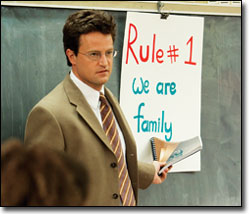
From the movie The Ron Clark Story
In this short scene, we see examples from all three of the main components that regulate the Affective Filter – the environment, the relationships, and the child. Ron Clark immediately changed the environment with his body language, his tone of voice, and by simply moving closer to the student. In two short minutes the relationship they formed was the catalyst that helped this young boy go from believing he was no better than trash to begin seeing in his own potential and worth.

 Chronicles of Clarity